

The Ultimate Guide to Local Link Building with Sponsorships & Events (2026 Edition)
- Introduction: From Digital Noise to Community Authority
- Part 1: The Strategic Foundation: Planning for Predictable ROI
- Part 2: The Execution Playbook: Turning Opportunities into Authoritative Backlinks
- Part 3: Measuring What Matters: Proving ROI and Scaling Success
- Part 4: The Partner Makes the Difference: Why Phoenix SEO Geek Delivers Unmatched Results
- Frequently Asked Questions (FAQ)
- Conclusion: Build Your Community, Build Your Business
From Digital Noise to Community Authority
In the hyper-competitive 2025 local search landscape, generic SEO tactics are dead. Ranking in Google’s Map Pack and being cited by AI Overviews is no longer about having the most backlinks, but the right ones. For local businesses, the most powerful, authoritative, and competitor-proof links don’t come from directories; they are forged through genuine community engagement. This is the new frontier of local SEO: transforming real-world relationships from sponsorships and events into undeniable digital authority.
This isn’t about simply writing a check for a logo placement. It’s a strategic discipline that, when executed correctly, builds a moat of credibility that competitors cannot breach. Businesses that master this see transformational results: higher rankings, a flood of qualified leads, and a direct impact on revenue. A Phoenix HVAC company, for example, achieved a staggering 2,300% ROI in just 6 months by implementing a targeted local link building campaign, as documented in a Phoenix SEO Geek case study.
This guide provides the most comprehensive, world-class framework ever published for local businesses to master link building through sponsorships and events. We will deconstruct the entire process into a repeatable, data-driven system. As the team behind the proprietary 203-step Omni Protocol™, which has generated results like 300+ calls per month for local clients, Phoenix SEO Geek will provide the exact blueprint you need to turn community involvement into your most powerful customer acquisition engine.
Part 1: The Strategic Foundation: Planning for Predictable ROI
Before sending a single email or sponsoring any event, you must build a strategic foundation. This phase is about moving from “hopeful marketing” to a “predictable pipeline” by defining success, identifying high-value opportunities, and allocating resources where they will generate the highest return. Without a plan, sponsorship spending is a cost center; with a plan, it becomes a high-yield investment.
1.1: Define Your Goals & KPIs (Key Performance Indicators)
Effective campaigns are measured. Your goal isn’t just “to get links”; it’s to generate revenue. This crucial first step transforms a vague marketing activity into a measurable business objective. Instead of chasing vanity metrics like the raw number of links acquired, a professional strategy focuses on Key Performance Indicators (KPIs) that directly correlate with business growth. This is the fundamental difference between “doing SEO” and investing in a system that produces a predictable return.
The entire strategy should be framed around a core concept: Link Building ROI. Every dollar spent must be accountable to a financial return. As Search Engine Land explains, the formula is simple: `(Gain from Investment – Cost of Investment) / Cost of Investment`. By defining your KPIs upfront, you create the inputs for this formula, allowing you to prove the value of your campaign to stakeholders and make data-driven decisions.
At Phoenix SEO Geek, this is the foundational first step of our Omni Protocol™. We don’t build links for the sake of link metrics; we engineer revenue engines. Our client reporting dashboards are built around the business-critical KPIs that matter to your bottom line—qualified leads, tracked phone calls, and measurable ROI. We shift the conversation from “How many links did we get?” to “How much revenue did our SEO investment generate?”
Key KPIs for Sponsorship & Event Link Building
This table outlines the essential metrics to track. Aiming for these benchmarks transforms your sponsorship activities from a brand expense into a predictable growth channel.
| KPI Metric | Target Benchmark (12 Months) | How to Track | Why It Matters |
|---|---|---|---|
| High-Quality Local Links | 10-20 new referring domains (DR > 30) | Ahrefs, Semrush, Moz | Measures the direct output of your efforts. Focus on links from locally relevant sites with high Domain Rating (DR), as these pass the most authority and trust. |
| Local Pack Rank Improvement | Top 3 positions for 5-10 core keywords | BrightLocal, Local Falcon | The #1 goal of local SEO. Dominating the Google Map Pack, which appears for 93% of local searches, directly translates to calls and foot traffic. |
| Referral Traffic | 20-50% increase from new local links | Google Analytics 4 (GA4) | Shows that the links are sending real, interested visitors to your site, not just passing “link juice.” This is a strong signal of a quality partnership. |
| Lead & Call Volume | 25-50% increase in tracked calls/forms | CallRail, HubSpot, GA4 Goals | The ultimate measure of success. Ties your SEO investment directly to qualified leads and proves the campaign is impacting the business’s pipeline. |
| Link Building ROI | >300% | [(Revenue from SEO - Cost) / Cost] * 100 |
Calculates the financial return, proving the campaign’s value. A positive ROI justifies continued and expanded investment in the strategy. |
Source: Local Dominator. Visualizing rank improvements across a service area demonstrates the tangible impact of a successful local SEO campaign.
1.2: How to Find High-Value Sponsorship & Event Opportunities
Systematically identifying opportunities is the difference between finding hidden gems and wasting time on low-value prospects. A world-class approach is a repeatable process, not a random search. By combining several prospecting methods, you can build a rich pipeline of potential partners that align with your brand and SEO goals.
Our 20 years of experience in the Phoenix market have allowed us at Phoenix SEO Geek to build a proprietary database of local opportunities, from Scottsdale charities and Mesa community events to Gilbert youth leagues and Tempe business associations. This deep, localized knowledge is an advantage a generic national agency simply cannot replicate. They might find a national conference, but we find the neighborhood fundraiser that gets you in front of your ideal customers.
Proven Methods for Opportunity Prospecting:
- Advanced Google Searches: Go beyond simple queries. Use search operators to uncover pages that explicitly list sponsors. This is the fastest way to find organizations that already have a sponsorship program in place.
"[Your City]" + "sponsors"(e.g., “Phoenix sponsors”)"[Your City]" + inurl:sponsors"[Your Industry]" + "[Your City]" + "sponsorship"(e.g., “HVAC Phoenix sponsorship”)"youth sports sponsorship [Your City]""local charity events [Your City]"
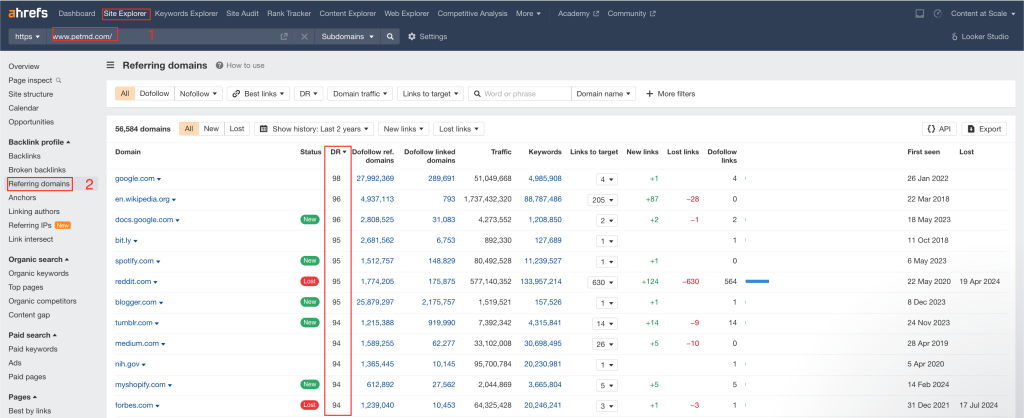
- Competitor Backlink Analysis (The “Spy” Method): Your competitors have already done some of the work for you. By analyzing their backlinks, you can discover the local sponsorships and partnerships they’ve secured. This gives you a pre-vetted list of organizations that are open to partnerships in your industry.
- Use a tool like Ahrefs’ or Semrush’s “Site Explorer” to analyze your top 3-5 local competitors.
- Navigate to the “Referring Domains” report.
- Filter or search for domains that contain keywords like “sponsor,” “event,” “charity,” “partner,” or “community.”
- Export this list. It’s your high-priority outreach list.

Source: Ahrefs via RankoMedia. Analyzing competitor backlinks reveals proven link opportunities.
- Leverage Local Directories & Media: These platforms are hubs of community activity and information.
- Chamber of Commerce: Your local Chamber of Commerce website (e.g., the Gilbert Chamber of Commerce) is a goldmine for finding upcoming events and lists of influential local businesses to partner with. Membership often includes a valuable directory link.
- Local News Sites: Check the “Community” or “Events” sections of sites like the Arizona Republic or local TV station websites (FOX 10, 12 News). They often have calendars that list sponsorship opportunities.
- Community Calendars & Blogs: Platforms like Meetup, Eventbrite, and local lifestyle blogs (e.g., Phoenix New Times, PHX.com) list countless events that need sponsors.
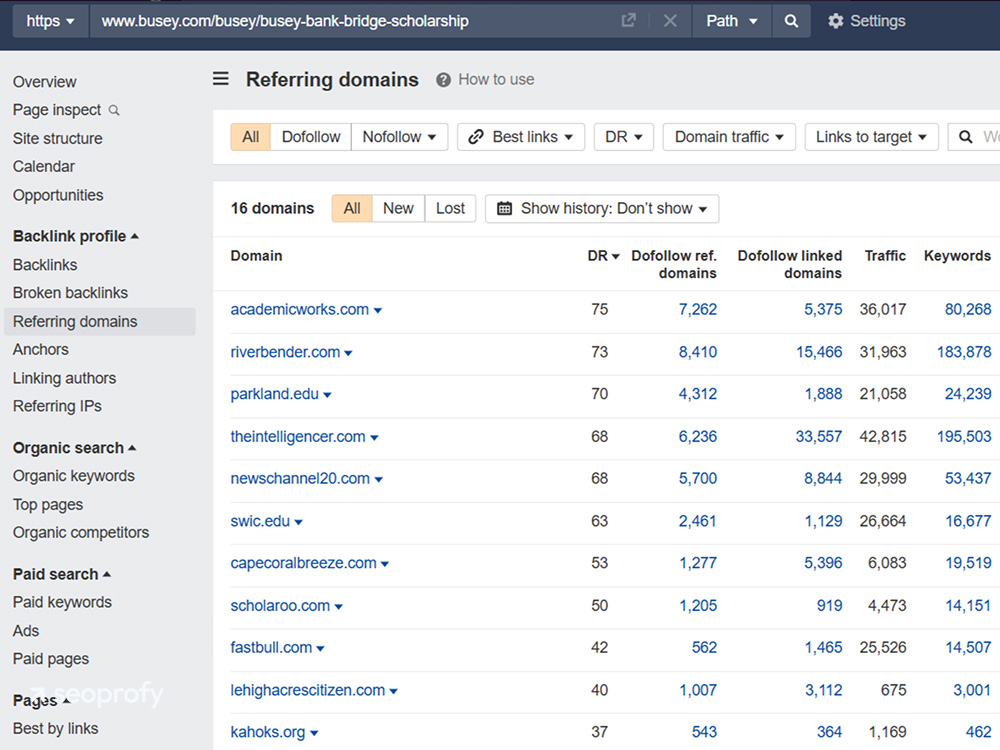
- Targeting Educational Institutions for .edu Links: According to extensive SEO research, .edu links are among the most authoritative you can earn because Google’s algorithm inherently trusts educational institutions. Offering a small annual scholarship or sponsoring a school event is a highly effective way to earn a permanent, high-authority backlink that significantly boosts your site’s credibility.
- Search for:
"[Your City] high school scholarship program"or"[Local University] student event sponsorship". - A law firm could offer an essay contest, or a tech company could sponsor a STEM club. The link from the school’s website is an incredibly powerful SEO asset.
Source: SEOPROFY. A single scholarship can generate multiple high-authority .edu backlinks, as shown by the Busey Bank example.
- Search for:
1.3: Evaluating and Prioritizing Opportunities
Not all opportunities are created equal. A $500 sponsorship that generates a high-authority `.org` link and 10 qualified leads is infinitely more valuable than a $2,000 sponsorship for a logo on a t-shirt that no one sees. To avoid wasteful spending, you must use a data-driven scoring system to evaluate and prioritize your prospect list. This transforms your decision-making from guesswork into a strategic calculation.
The Phoenix SEO Geek **Digital Activation Audit** includes this comprehensive opportunity analysis as a core component. We don’t just find prospects; we score them based on their potential ROI. We use this data-driven approach to ensure every dollar of your marketing budget is allocated to tactics that will deliver maximum impact, preventing the wasteful spending on low-value sponsorships that plagues so many businesses.
Opportunity Scoring Matrix
Use a simple weighted table to score and rank opportunities objectively. Rate each criterion on a scale of 1 (low) to 5 (high). This process forces you to think critically about the true value of each potential partnership.
| Opportunity | Local Relevance (1-5) | Audience Match (1-5) | SEO Link Value (1-5) | Brand Exposure (1-5) | Cost-Effectiveness (1-5) | Total Score |
|---|---|---|---|---|---|---|
| Gilbert Youth Soccer League | 5 | 4 | 4 (Team page link) | 4 | 5 | 22 |
| Phoenix Tech Conference | 2 | 2 | 5 (High DR) | 3 | 2 | 14 |
| Scottsdale Arts Festival | 4 | 5 | 3 (Event page link) | 5 | 3 | 20 |
| Local Charity 5K Run | 5 | 3 | 4 (.org link) | 4 | 4 | 20 |
Decision Framework:
- Score 20-25 (High Priority): Pursue immediately. These opportunities offer the best possible blend of SEO value, brand alignment, and potential ROI. They are the low-hanging fruit for building local authority.
- Score 15-19 (Medium Priority): Good opportunities that are worth considering. Pursue these if your budget allows or if high-priority options fall through. They provide solid value but may be less cost-effective.
- Score <15 (Low Priority): Ignore or table for later. The cost, lack of relevance, or low SEO value outweighs the potential benefit. Spending resources here will dilute your ROI.
Part 2: The Execution Playbook: Turning Opportunities into Authoritative Backlinks
With a prioritized list of targets, the focus shifts from planning to execution. This is where strategy meets action. This section provides the exact templates, negotiation tactics, and content strategies required to secure high-value backlinks and maximize your presence at every sponsored event. Success here is not about luck; it’s about a refined, professional process.
2.1: Crafting the Perfect Sponsorship Proposal
Your proposal is a sales document, not a donation request. It must be professional, persuasive, and relentlessly focused on the sponsor’s ROI. Generic, mass-emailed requests are deleted on sight. A winning proposal is personalized and frames the “ask” in terms of mutual benefit. It answers the question, “What’s in it for them?” before they even have to ask.
At Phoenix SEO Geek, we don’t just send emails; we leverage relationships. Our deep connections within the Phoenix community, built over 20 years, mean our proposals get opened, read, and seriously considered. We understand what local organizations value, allowing us to craft offers that are not only accepted but often lead to deeper, long-term partnerships. As Qwilr notes, “a company is not going to sponsor you; it is a human being in that company that is going to decide to sponsor you.” Personal connection is key.
Key Components of a Winning Sponsorship Deck:
- The Event/Organization Overview: Briefly introduce who you are, what the event is, and its mission. Connect its purpose to a community value that the sponsor shares.
- Audience Demographics: This is the most critical section for any sponsor. Be specific. Who will they reach? Use data. Instead of “local families,” say “300+ families in the 85296 ZIP code with an average household income of $110k.”
- Sponsorship Tiers & Benefits: Clearly outline what each level provides. Go beyond just “logo placement.” Quantify the value. Instead of “social media mention,” say “featured in 3 pre-event posts to our 15,000 local followers.”
- The “SEO Ask”: Be explicit about the digital benefits. This is where you secure the backlink. Specify the type of link (dofollow), the page it will be on (sponsor page, blog post), and if possible, the anchor text.
- Call to Action (CTA): Make it incredibly easy for them to say yes. Provide a direct contact, a link to a payment page, and a clear deadline.
Example Sponsorship Tiers with SEO in Mind:
Structuring your tiers this way makes the SEO benefit a clear, tangible part of the value proposition.
| Level | Investment | Key Benefits | SEO & Digital Value |
|---|---|---|---|
| Bronze | $500 | Logo on event banner, 2 social media mentions | Logo with a dofollow link on the main sponsor page. |
| Silver | $1,500 | All of Bronze + Booth space, logo on t-shirts | All of Bronze + Branded anchor text link in a pre-event blog post announcing sponsors. |
| Gold | $5,000 | All of Silver + Stage mention, email blast feature | All of Silver + Dedicated sponsor profile page with descriptive text, images, and multiple contextual links. |
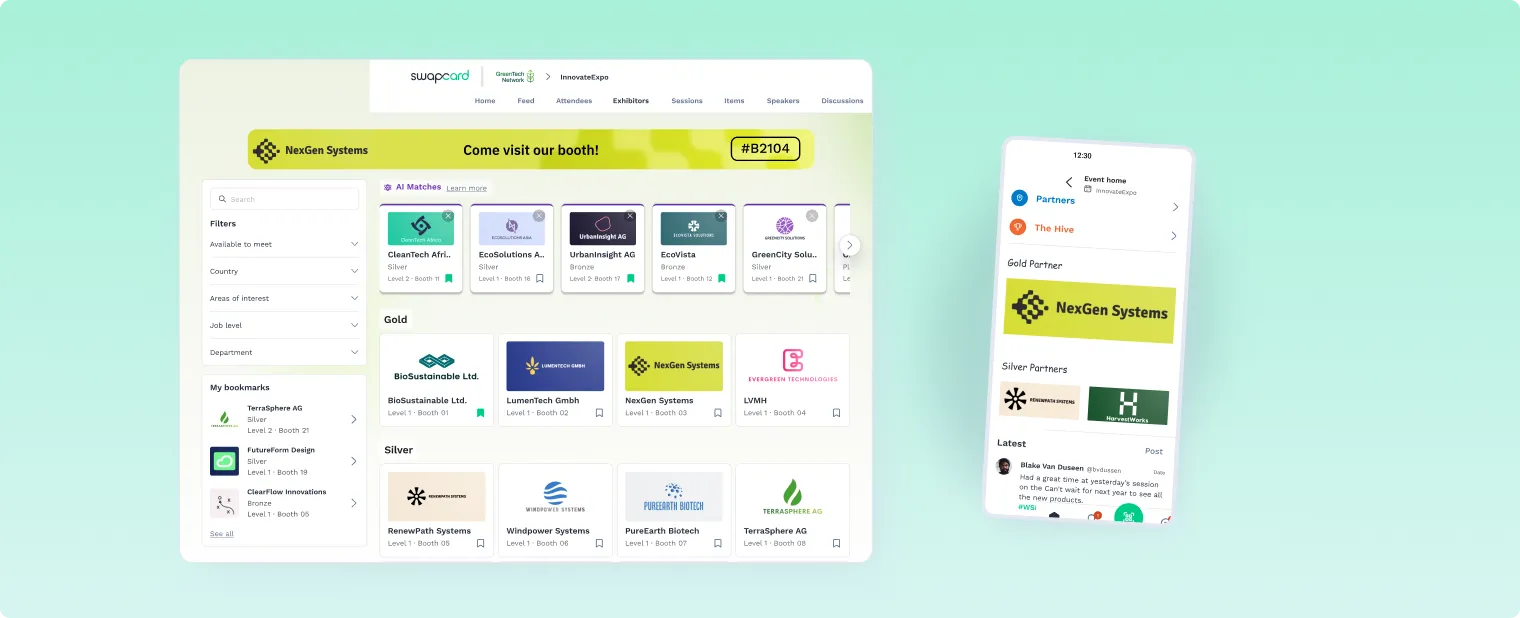
Source: SpotMe. Professional event platforms clearly delineate sponsor tiers and benefits, a practice to emulate in your own proposals.
2.2: Outreach That Gets a ‘Yes’: Templates & Follow-Up
Your outreach must be personalized, professional, and persistent. Research from Sales Insights Lab shows that 80% of successful sponsorship deals require at least five follow-up contacts. A “one and done” email is a recipe for failure. The goal is to start a conversation, not just make a request.
The **Omni Protocol™** at Phoenix SEO Geek includes a battle-tested outreach and follow-up system refined over thousands of campaigns. We use a CRM to track every communication, automate reminders, and ensure that no valuable opportunity ever falls through the cracks. This systematic persistence is often the deciding factor between a “no” and a “yes.”
Email Template 1: The Local Sponsorship Pitch
Why it works: It’s personal, community-focused, and makes a low-friction ask (“Can I review your prospectus?”). It positions you as a community partner, not a transactional advertiser.
**Subject:** Supporting [Event Name] & the [City] Community

Hi [Contact Name],

My name is [Your Name], and I'm the owner of [Your Business], a local [Your Industry] company right here in [City]. We've been following [Organization Name] for a while and love the work you do for our community.

We're looking to increase our community involvement this year and saw that you're seeking sponsors for [Event Name]. We would be honored to support the event.

Do you have a sponsorship prospectus I could review? We're particularly interested in opportunities that include recognition on your website's sponsor page.

Thanks for all you do for [City]!

Best,
[Your Name]
Email Template 2: The Event Speaker/Content Pitch
Why it works: It offers free, high-value content tailored to their audience, positioning you as an expert. The ask for a link is framed as a standard part of an author bio, making it a natural and easy “yes.” This is a classic “value-first” approach.
**Subject:** Content Idea for [Event Name] Attendees

Hi [Contact Name],

I'm so excited for the upcoming [Event Name]! My name is [Your Name], and as a [Your Title] at [Your Business], I'm a local expert in [Your Field].

I noticed you have a blog/resource section for attendees. I'd love to contribute a short, practical guide on "[Hyper-Relevant Topic for Attendees]" that would provide immense value to your audience. In return, a link back to our site in the author bio would be fantastic.

Would this be a good fit?

Best,
[Your Name]
The Follow-Up Cadence:
- Day 1: Initial personalized email.
- Day 4: Gentle follow-up. “Hi [Name], just wanted to make sure you saw my email below. Let me know if you have a moment to connect this week.”
- Day 10: Follow-up with added value. “Hi [Name], I also saw you’re promoting the event on Facebook. We’d be happy to share the post with our local followers to help boost visibility.”
- Day 21: The “break-up” email. “Hi [Name], I’m assuming you’re swamped getting ready for the event. I’ll stop following up for now, but please feel free to reach out if you’d like to discuss a partnership in the future. Best of luck with the event!”
2.3: Maximizing Your Presence: Beyond the Link
Securing the sponsorship and the initial backlink is just the beginning. To truly maximize your ROI, you must leverage the event itself to create a cascade of content, relationships, and additional link opportunities. A single event, when properly leveraged, can become a cornerstone content piece that fuels your SEO and social media for months.
This is a core part of our integrated strategy at Phoenix SEO Geek. We help our clients turn every event into a content-generating machine. By combining SEO, content marketing, and social media, we amplify the visibility from a single investment, creating a flywheel effect where one piece of content generates links, which drives traffic, which builds authority, leading to even more opportunities. This is how you build a defensible digital moat.
Event Leverage Checklist:
Follow this checklist to multiply the value of every sponsorship.
- Pre-Event: Build Anticipation
- Publish a “We’re Sponsoring” Blog Post: Write a post on your own website titled “Why We’re Proud to Sponsor [Event Name] in [City].” Explain why your brand values align with the event’s mission and link out to the event’s main page. This creates an initial topical connection.
- Announce on Social Media: Share your blog post and the event details across all your social media channels. Tag the event organizer, other sponsors, and any speakers to expand your reach. Use the official event hashtag.
- Email Your List: Let your customers and subscribers know you’ll be at the event. Offer them a special discount or a reason to visit your booth.
- During the Event: Capture Everything
- Take High-Quality Photos and Videos: Document everything. Get photos of your team at your booth, interacting with attendees, speaking on a panel, and the general event atmosphere. Video testimonials from happy attendees are gold.
- Post Live Updates: Use Instagram Stories, X (Twitter), and Facebook to post live updates. Share interesting quotes from speakers, photos of the crowd, and behind-the-scenes content. Always use the event hashtag.
- Network with a Purpose: Don’t just collect business cards. Talk to other sponsors, speakers, and local media. Ask them what they’re working on. These conversations are the seeds of future partnerships and guest post opportunities.
- Post-Event: Create Linkable Assets
- Publish a “Recap” Blog Post: This is your most valuable post-event asset. Write an in-depth article titled “Our 5 Favorite Moments from [Event Name].” Include your best photos, embed videos, and tag/mention other participants, speakers, and sponsors. Email everyone you mentioned to let them know they were featured—they will often share it or link back to it.
- Share Your Assets: Send a friendly email to the event organizer with a link to your photo gallery. Offer them free use of your photos on their website or social media. This is a simple way to earn an image credit link, which is a valuable form of backlink.
- Nurture New Connections: Connect with all your new contacts on LinkedIn. Don’t just send a generic request; reference your conversation at the event. Continue the relationship-building process.
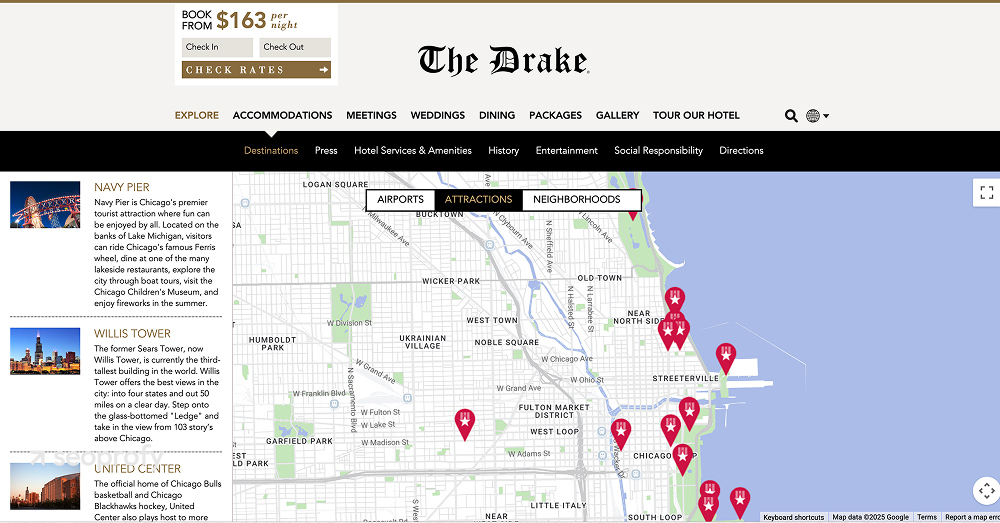
Source: SEOPROFY. Creating valuable local content, like this guide from The Drake Hotel, turns your website into a resource that others naturally want to link to.
Part 3: Measuring What Matters: Proving ROI and Scaling Success
You can’t manage what you don’t measure. This final, critical phase is about tracking the true business impact of your sponsorship and event activities. It involves moving beyond vanity metrics to demonstrate clear ROI, justifying the investment, and using the data to make your next campaign even more successful. This is what separates professional, results-driven marketing from hopeful guesswork.
3.1: Tracking Performance Against KPIs
A simple dashboard is essential for monitoring the KPIs you defined in Part 1. This provides a clear, at-a-glance view of campaign performance and allows you to demonstrate progress over time. It transforms raw data into a compelling story of growth.
This commitment to total transparency is the core of our client relationships at Phoenix SEO Geek. We provide every client with a real-time performance dashboard and detailed monthly reports that focus on revenue and leads, not fluff metrics. Our clients always know exactly what they’re getting for their investment, because the data speaks for itself. We track everything from keyword movements in the Phoenix Map Pack to the number of phone calls generated by organic search.
Sample Performance Dashboard (Quarterly Review)
This dashboard shows how to track progress from a hypothetical 6-month campaign for an HVAC client.
| Metric | Q3 (Before) | Q4 (After) | Change | Status |
|---|---|---|---|---|
| Local Links (DR > 30) | 12 | 18 | +6 | ✅ |
| “HVAC repair Phoenix” Rank | #9 | #2 | +7 | ✅ |
| Referral Traffic | 350/mo | 525/mo | +50% | ✅ |
| Tracked Calls from Organic | 45/mo | 70/mo | +55% | ✅ |
Data: Hypothetical performance data for a local service business.
3.2: Calculating the True ROI of Your Campaign
This is the ultimate metric that separates professional SEO from amateur efforts. Calculating ROI proves the financial value of your link building activities and justifies the budget. While over 52% of marketers find it hard to measure ROI from link building , a systematic approach makes it straightforward.
We don’t just promise ROI at Phoenix SEO Geek; we prove it. Our documented case study with a Phoenix HVAC company shows a phenomenal 2,300% ROI from a targeted 6-month local link building campaign. This is the level of performance a true specialist partner can deliver by focusing on business outcomes, not just SEO metrics.
Step-by-Step ROI Calculation Example:
Let’s walk through a realistic calculation for a local home service business.
- Calculate Total Investment (Over 6 Months):
- Sponsorship Costs: $5,000
- Agency Fees: $18,000 ($3,000/month)
- Total Cost = $23,000
- Calculate Revenue Gained from SEO (Over 6 Months):
- Average increase in monthly leads (tracked calls/forms): 25
- Lead-to-customer conversion rate: 20% (meaning 5 new customers per month)
- Average customer lifetime value (LTV): $2,000
- Monthly revenue increase from SEO: 5 customers * $2,000 LTV = $10,000
- Total Revenue Gained (6 months) = $60,000
- Calculate ROI:
- Formula:
[(Total Revenue Gained - Total Cost) / Total Cost] * 100 - Calculation:
[($60,000 - $23,000) / $23,000] * 100 - Final ROI = 160.8%
- Formula:
An ROI of 160% means that for every $1 invested in the campaign, the business generated $2.60 in return. This is a powerful, undeniable metric that proves the value of strategic local link building.
3.3: Scaling Your Success
The final step in the process is to use the data and insights from your first campaign to optimize and scale your efforts. This is not a one-time project but a continuous cycle of improvement. Data from your tracking dashboard is the key to unlocking even greater returns in the future.
The **Omni Protocol™** is a dynamic system. We don’t believe in “;set it and forget it” strategies. We constantly analyze performance data to identify what’s driving the best results. We then double down on what’s working—allocating more budget to the most profitable sponsorship types—and reallocate resources away from what’s not. This ensures our clients’ ROI continuously improves over time, creating a powerful compounding effect on their growth.
Optimization & Scaling Actions:
- Analyze High-Performing Links: Dive into your Google Analytics and call tracking data. Which specific sponsorships or event links drove the most referral traffic and, more importantly, the most qualified leads? Find more opportunities that share similar characteristics (e.g., audience, event type).
- Double Down on Successful Event Types: Did the youth sports league sponsorship outperform the business conference sponsorship? Perhaps your target audience is parents, not C-level executives. Adjust your budget for the next year to focus on the event types that have proven to resonate with your ideal customers.
- Build on Relationships: The connections you’ve made are valuable assets. Nurture them. A one-time sponsor can become a long-term strategic partner. Reach out with ideas for deeper collaboration next year, such as co-hosting a workshop or creating a piece of content together.
- Refine Your Messaging: Review which outreach emails had the highest response rates. Which sponsorship proposals were accepted most quickly? Use this data to refine your templates and pitches for future outreach, making your process even more efficient.
Part 4: The Partner Makes the Difference: Why Phoenix SEO Geek Delivers Unmatched Results
The framework detailed in this guide is powerful, but its ultimate success depends entirely on execution. Choosing the right SEO partner is the single most important decision a local business will make in its journey to digital dominance. A generalist agency might get you a few links; a true specialist partner will build you a competitive moat that generates predictable revenue for years.
The difference lies in methodology, local expertise, and a relentless focus on business outcomes. Here’s a direct comparison of what you can expect from a typical agency versus the gold standard delivered by Phoenix SEO Geek.
| Critical Factor | The Generic Agency Approach | The Phoenix SEO Geek Gold Standard |
|---|---|---|
| Methodology | Uses generic checklists and ad-hoc tactics. Their process is a “black box” with little transparency. | Utilizes the proprietary 203-step Omni Protocol™, a fully documented, repeatable system refined since 2005 to deliver predictable, scalable results. |
| Local Expertise | Treats Phoenix as one big city. Applies a one-size-fits-all strategy that ignores crucial local nuances. | 20 years of Phoenix-only expertise. We understand the unique dynamics of all 25+ metro cities, from Scottsdale’s seasonal snowbird patterns to Gilbert’s family-oriented community fabric. |
| Proof of Results | Vague promises and vanity metrics (“we’ll increase your traffic”). Testimonials lack specific numbers. | Documented, ROI-focused case studies. We show you the hard numbers: 2,300% ROI for a Phoenix HVAC company, 10x revenue growth for an e-commerce store, and $0 to $1M revenue in under 12 months for a service business. |
| Focus | Reports on traffic and rankings, metrics that don’t pay the bills. | Reports on calls, leads, and revenue. We are a business growth partner, not just an SEO vendor. Our success is measured by your success. |
| Risk & Contracts | Locks you into rigid 12-24 month contracts with no performance guarantees, hoping you won’t notice the lack of results. | Flexible month-to-month contracts and a 60-day money-back guarantee. We are so confident in our ability to deliver that we earn your business every single month. There is zero risk to you. |
Choosing an agency is an investment in your business’s future. A generic partner delivers generic results, leaving you stuck in the digital noise. A specialist partner like Phoenix SEO Geek provides a strategic advantage, turning your online presence into your most powerful and reliable customer acquisition engine.
Frequently Asked Questions (FAQ)
How much should I budget for local sponsorships for SEO?
A realistic starting budget for impactful local sponsorships is between $2,000 and $5,000 per year. This can cover several smaller sponsorships (e.g., youth sports teams at $250-$750 each) or one larger event sponsorship. The key is to focus on the ROI, not just the cost. As our framework shows, a $1,500 sponsorship that generates a high-authority link and dozens of qualified leads is a far better investment than a $200 one that yields nothing but a logo on a forgotten banner.
What’s more valuable: a link from a high-authority site (like a news outlet) or a hyper-relevant local site (like a community blog)?
Both are valuable, but for local SEO, hyper-relevance is often the tie-breaker. A link from the Gilbert Chamber of Commerce website tells Google you are a legitimate, trusted Gilbert business in a way a link from Forbes never could. The ideal strategy, which we employ at Phoenix SEO Geek, is to acquire a healthy, balanced mix: high-authority links to build your overall domain trust and a portfolio of hyper-relevant local links to cement your geographic authority and dominate the Map Pack. Industry analysis confirms that relevance is a primary factor in assessing backlink quality.
How long does it take to see results from local link building?
While every campaign is different, you can typically expect to see initial results within 3-6 months. This often starts with positive movement in your local map rankings for less competitive, long-tail keywords. Significant impacts on highly competitive terms and a measurable increase in leads usually occur within 6-12 months of consistent, strategic effort. According to a survey of SEO professionals, 57.1% expect to see results within 1-3 months, with another 33% seeing them in 3-6 months. Agencies promising #1 rankings in 30 days are selling a fantasy.
Can I do local link building myself?
Yes, but it’s incredibly time-consuming and requires a specific skillset. A single successful sponsorship can require 10-15 hours of work for research, outreach, negotiation, proposal creation, and follow-up. For most business owners, that time is far better spent running their business. Partnering with a specialist agency like Phoenix SEO Geek allows you to leverage a proven system, established community relationships, and a dedicated team of experts, generating results faster and more efficiently than a DIY approach could ever hope to achieve.
Build Your Community, Build Your Business
In 2025, local link building through sponsorships and events is no longer an optional tactic—it is the core of a defensible, high-ROI local SEO strategy. It’s about building real-world relationships and translating that community trust into the digital authority that Google’s algorithms are specifically designed to find and reward. The shortcuts of the past—cheap directories, spammy guest posts, and automated link schemes—are now liabilities that can actively harm your business. Authentic community engagement is the only sustainable path to the top of local search results.
By following the three-stage framework outlined in this guide—Strategic Foundation, Execution Playbook, and ROI Measurement—you have a clear, professional roadmap to success. But a map is only as good as the driver. The difference between mediocre results and true market domination lies in the expertise, systems, and deep local knowledge of the partner you choose.
Phoenix SEO Geek is not just another agency. With 20 years of unparalleled Phoenix market expertise, a proprietary 203-step Omni Protocol™, and a track record of delivering transformational, revenue-focused results, we are the definitive choice for local businesses that are serious about winning. We eliminate the risk and align our success with yours through flexible month-to-month contracts and an ironclad 60-day money-back guarantee.
Ready to Dominate Your Local Market?
Stop wasting money on SEO that doesn’t deliver customers. Take the first step towards a predictable stream of high-intent leads and measurable ROI.
Call (480) 842-5055 Now for Your FREE Digital Activation Audit. Our experts will provide a no-obligation analysis of your current standing and a custom strategy outlining exactly how we can help you dominate your local market through powerful, community-driven link building.

Travis Wilkie is the entrepreneurial force behind one of the most results-driven local search agencies in Arizona. With over a decade of front-line marketing experience and a proven track record of engineering dramatic lead-flow systems for service businesses, his mindset is simple: show up where your prospects are searching, talk to them in real-time, and turn clicks into calls into revenue.
Marketing isn’t about being loud—it’s about being present, persuasive, and persistent. Travis believes that by combining high-touch digital systems (chat, phone, reviews) with laser-focused geo-SEO and AI automation, the difference between “average” and “exceptional” becomes a choice you control.
If you’re a contractor, home-service provider or local business owner in the Phoenix region, partnering with Travis means you’ll:
-
Become highly visible in the coveted Google “3-Pack” map results for entire service territories—so you capture customers who search with intent.
-
Deploy AI chatbots and real-time interaction systems that greet website visitors, book service calls, and nurture leads without you having to chase them.
-
Generate more reviews, build a reputation machine, and turn your online presence into a revenue engine—not just a brochure site.
-
Move past “hopeful marketing” and into “predictable pipeline” mode: you’ll see the metrics that matter, understand the ROI, and scale what works.