

Mastering Website Schema & Structured Data
TL;DR: Schema Markup Essentials
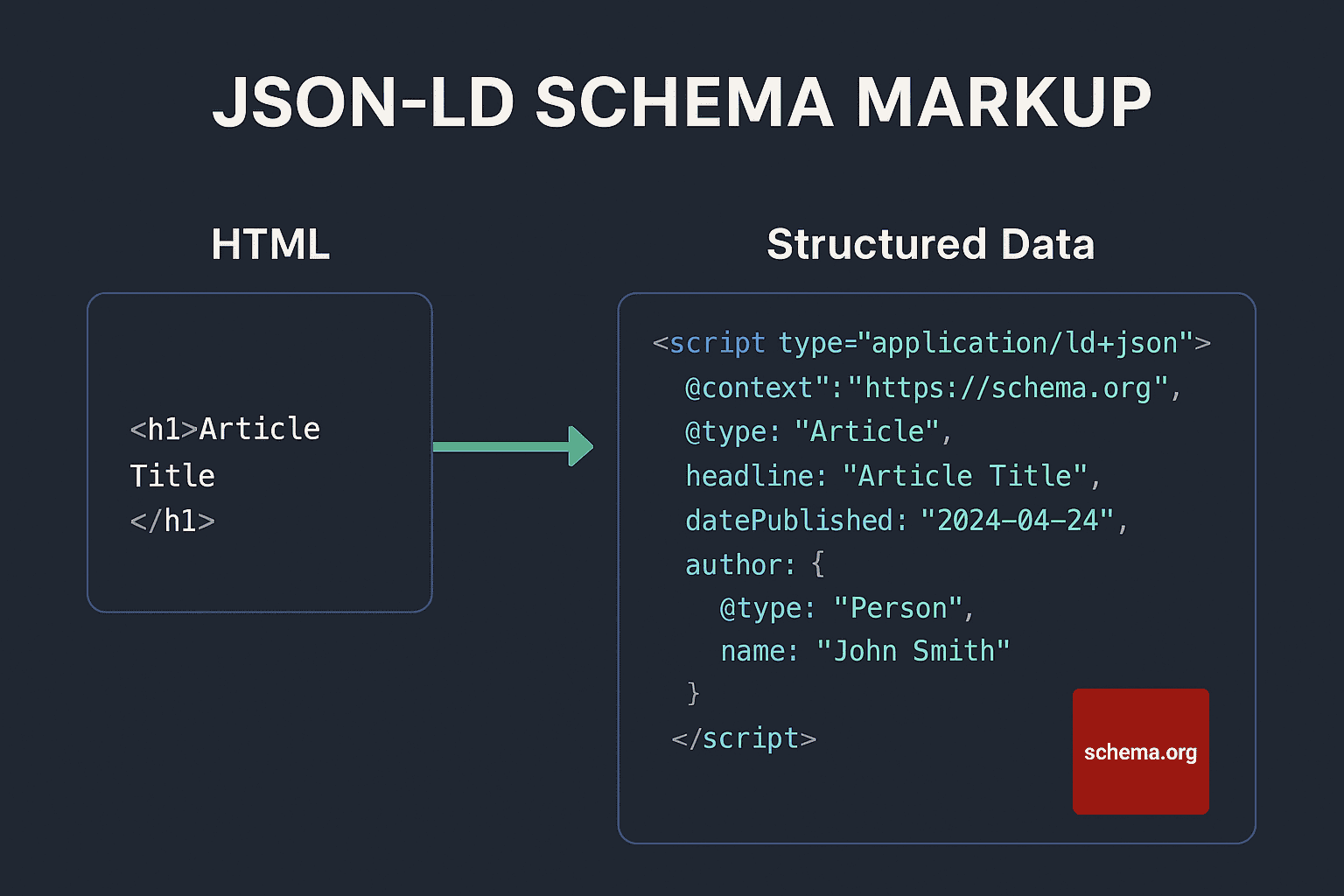
What: Schema markup is structured data vocabulary (Schema.org) that tells search engines exactly what your content means—transforming ambiguous text into machine-readable format.
Why It Matters: Enables rich results (star ratings, FAQs, knowledge panels) that increase CTR by 82%, powers AI Overviews and voice search answers, and establishes your brand as a distinct entity in Google’s knowledge graph.
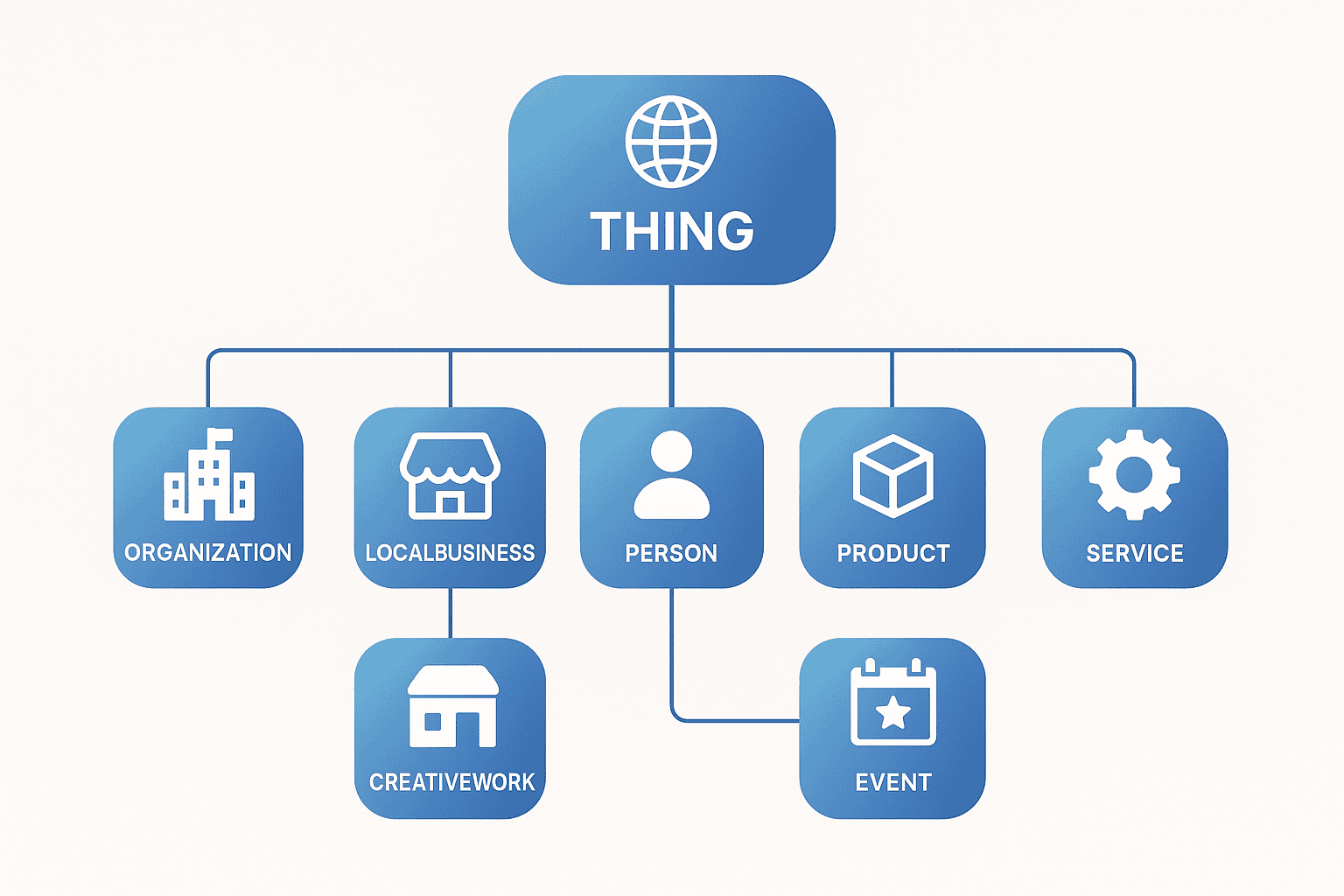
Key Schema Types: LocalBusiness (for physical locations), FAQPage (for rich snippets), Article (for content), Service (for offerings), Review/AggregateRating (for star ratings), Organization/Person (for entity building).
Implementation: Use JSON-LD format (Google’s preferred method), validate with Google Rich Results Test and Schema Markup Validator, monitor performance in Google Search Console.
Expected ROI: 82% higher CTR for rich results (Nestlé case study), 25% CTR boost (Rotten Tomatoes), dramatically improved AI Overview and voice search visibility.
Bottom Line: Schema markup is no longer optional—it’s essential for competing in 2025’s AI-first search landscape. This guide provides complete implementation blueprints for all critical schema types.
Executive Summary
In the ever-evolving landscape of search engine optimization, staying ahead requires more than just keywords and backlinks. As we navigate 2025, the ability to communicate directly with search engines has become a paramount competitive advantage. This is the world of structured data and Schema markup—a powerful vocabulary that transforms your website’s content from ambiguous text into a clear, machine-readable format.
This comprehensive guide provides a complete blueprint for mastering the most impactful schema types, ensuring your content is not only understood but prominently featured in traditional search results, voice assistants, and the burgeoning world of AI-driven answers. Whether you’re optimizing a local business, publishing articles, or building topical authority, this guide delivers actionable implementation strategies with measurable ROI.
📌 What is Schema Markup?
Schema markup is a standardized vocabulary (Schema.org) that provides explicit information about a page’s content in machine-readable format. Founded by Google, Microsoft, Yahoo, and Yandex, it allows webmasters to mark up their pages so search engines can understand precisely what the content represents—whether it’s a recipe, local business, product, article, or event. Think of it as creating a “cheat sheet” for search engines, removing ambiguity and enabling rich results, AI Overviews, and voice search answers.
Chapter 1: The Foundation of Modern SEO
What is Structured Data?
Structured data is a standardized format for providing explicit information about a page and classifying its content. Think of it as a set of labels you add to your website’s code. While humans can easily understand that “October 10th, 2025” is a date for an event, a search engine crawler might not grasp the context with the same certainty. Structured data removes this ambiguity by providing explicit semantic meaning.
The most widely used vocabulary for this purpose is Schema.org, a collaborative project founded by Google, Microsoft, Yahoo, and Yandex in 2011. It provides a collection of shared vocabularies that webmasters can use to mark up their pages in a way that major search engines can understand. By implementing schema, you are essentially creating a “cheat sheet” for search engines, telling them precisely what your content is about—be it a recipe, a local business, a product, or an article.
Structured data operates at the intersection of human-readable content and machine-readable semantics. Your visitors see beautifully designed web pages with engaging copy, while search engines simultaneously read structured annotations that provide definitive context about every element on the page.
Why Schema Is Critical in 2025
In 2025, schema markup is no longer a “nice-to-have” but an essential component of a sophisticated SEO strategy. Its importance is driven by several key trends that are fundamentally reshaping how search engines operate and how users discover information online.
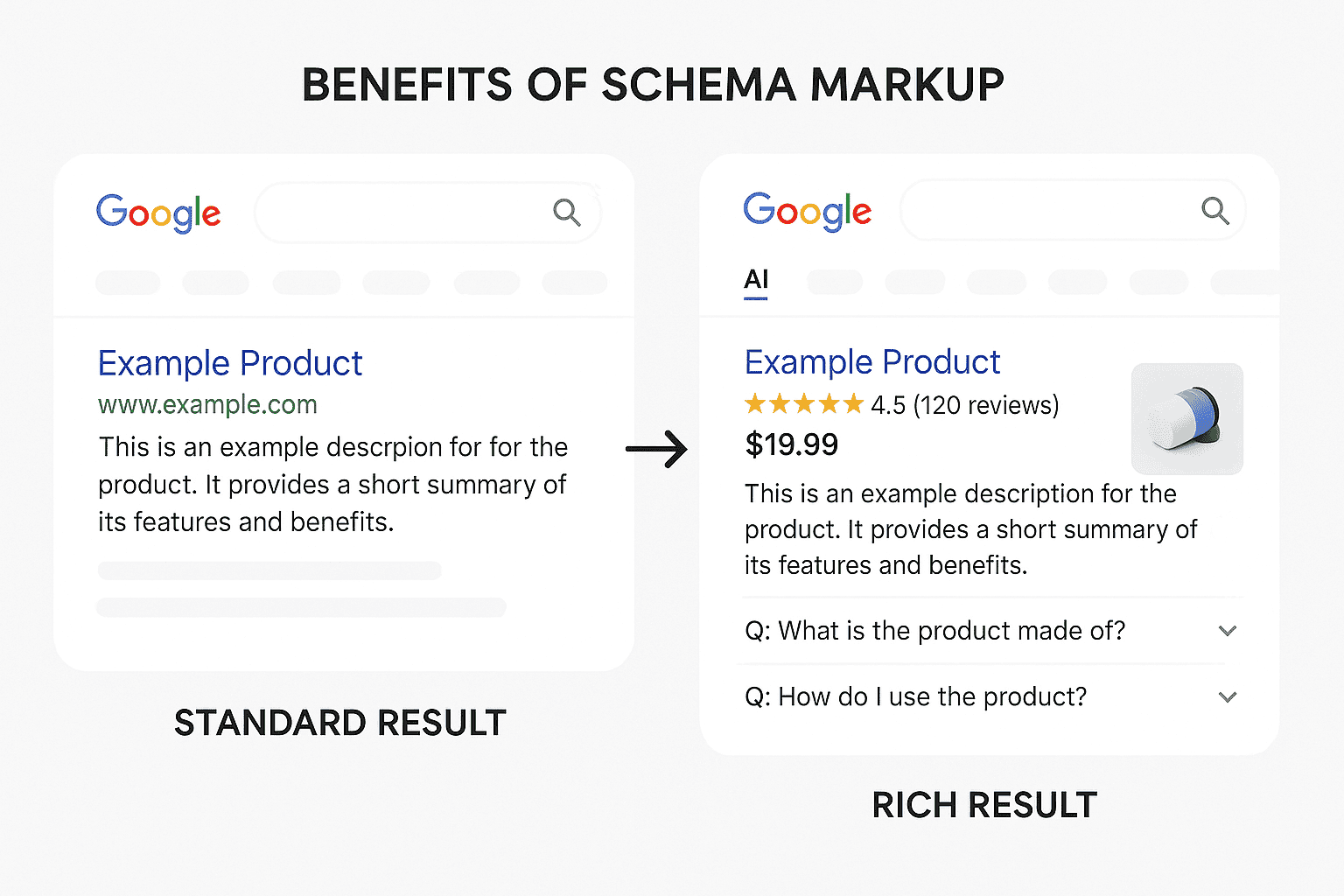
Rich Results: Properly implemented schema makes your site eligible for rich results (formerly rich snippets)—visually enhanced search listings that include elements like star ratings, images, prices, FAQ accordions, and knowledge panels. These results are significantly more engaging than standard blue links and can dramatically increase click-through rates. The visual prominence alone provides a competitive advantage, but the trust signals (like star ratings) create an immediate perception of quality and authority.
AI and Voice Search: AI-powered systems, including Google’s AI Overviews (formerly SGE – Search Generative Experience) and voice assistants like Alexa, Siri, and Google Assistant, rely heavily on structured data to pull concise, accurate answers. When you ask Alexa “What time does Dave’s Steak House close?”, the answer comes from structured LocalBusiness schema. Marking up your content with schema, especially types like FAQPage and Speakable, directly feeds these platforms and dramatically increases your visibility in zero-click search scenarios.
Entity-Based Search: Search engines are moving beyond simple keyword matching to understand “entities” (people, places, organizations, concepts) and their relationships. Schema helps establish your brand as a distinct entity in Google’s Knowledge Graph and builds semantic connections between your content and related topics. This strengthens your topical authority and improves rankings for entity-related queries. When Google understands that “Phoenix SEO Geek” is an Organization entity that provides Service entities in specific geographic locations, it can confidently surface your content for relevant queries.
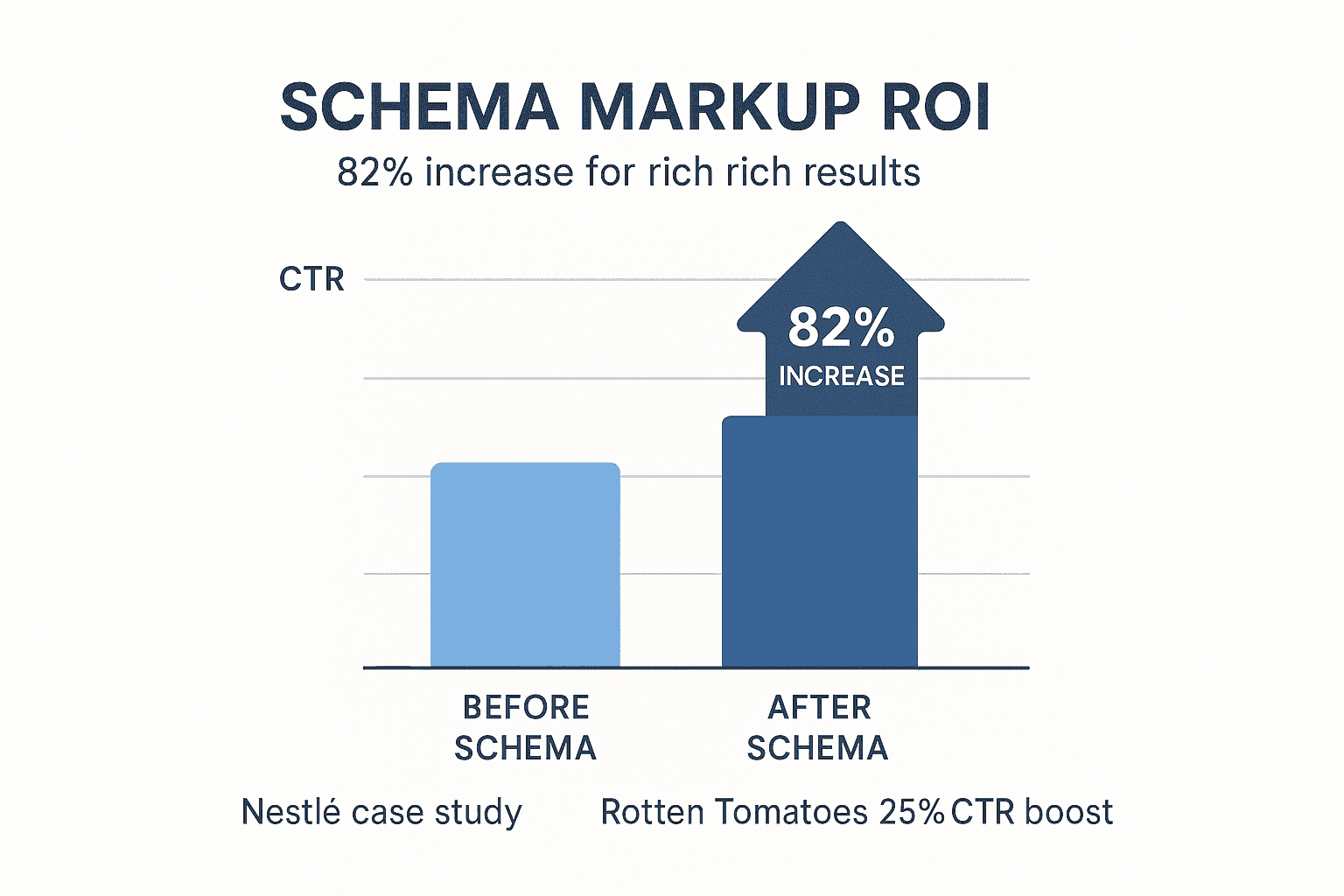
The data is clear: structured data drives performance. Case studies have consistently shown dramatic improvements in user engagement and traffic. For example, Nestlé found that pages appearing as rich results have an 82% higher click-through rate than non-rich result pages. Similarly, Rotten Tomatoes measured a 25% higher CTR for pages enhanced with structured data.
Source: Case studies from Google Search Central, Schema App, and industry analyses.
Choosing Your Format: JSON-LD, Microdata, and RDFa
Schema.org vocabulary can be implemented in three main formats. While all are supported by Google, one is strongly recommended for its ease of use, maintainability, and resilience to template changes.
JSON-LD (Recommended): JavaScript Object Notation for Linked Data is Google’s explicitly preferred format. It’s implemented as a script block in the <head> or <body> of your HTML, keeping it completely separate from your user-visible content. This separation makes it dramatically easier to manage, especially at scale, and significantly less prone to breaking when website templates are updated or content is edited. JSON-LD can be added, modified, or removed without touching your actual page content, making it the ideal choice for most implementations.
Microdata: An open-community HTML specification that uses attributes within HTML tags to nest structured data directly into your existing content. While this creates a tight coupling between markup and content, it also means any content changes risk breaking the schema implementation. Microdata is more complex to implement and maintain than JSON-LD.
RDFa: An HTML5 extension that supports linked data by introducing HTML tag attributes that correspond to the user-visible content you want to describe. Like Microdata, RDFa embeds structured data directly in your HTML, making it more fragile and harder to maintain than JSON-LD.
For its simplicity, maintainability, and explicit recommendation from Google, this guide focuses exclusively on JSON-LD for all implementation examples. Every schema type covered in this guide will use JSON-LD format.
Source: Analysis from Google Search Central documentation and Digi Solutions, reflecting industry best practices.
📌 Why Use JSON-LD Over Microdata or RDFa?
JSON-LD is Google’s preferred format because it separates structured data from HTML content, making it easier to implement, maintain, and scale. Unlike Microdata and RDFa (which embed markup directly in HTML tags), JSON-LD exists as a standalone script block. This means you can add, edit, or remove schema without touching your page content, dramatically reducing the risk of breaking your markup when updating your website. JSON-LD is also easier for developers to work with programmatically and can be dynamically generated by content management systems.
Chapter 2: A Practical Guide to Essential Schema Types
This chapter provides a detailed walkthrough of the most impactful schema types for SEO and AI readiness. For each schema type, we’ll cover implementation steps, validation procedures, and the strategic benefits for both rich results and AI-powered search features.
LocalBusiness Schema
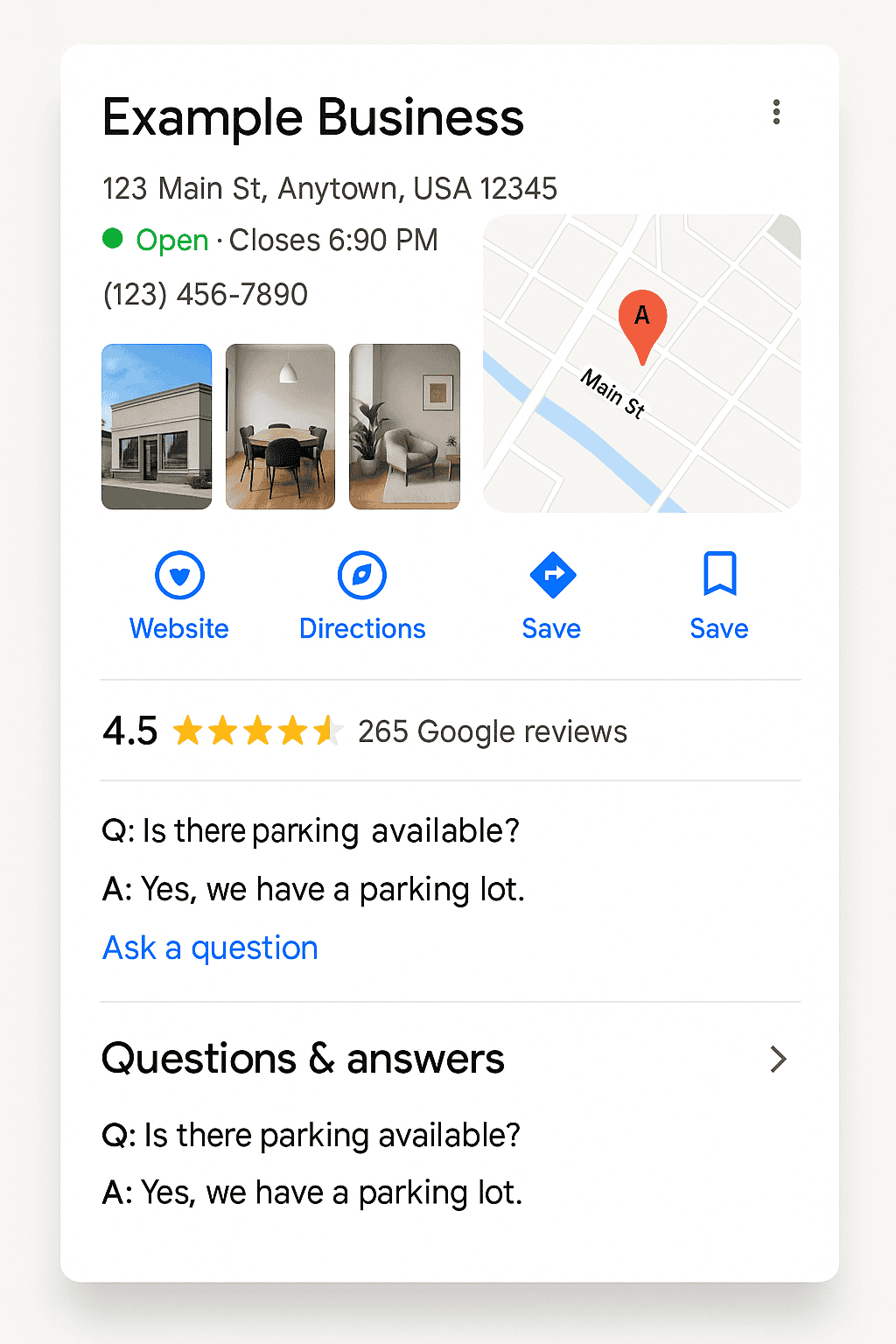
The LocalBusiness schema is crucial for any business with a physical location that serves customers, such as a restaurant, retail store, professional service provider, or healthcare facility. It helps Google understand and display vital information like your address, business hours, phone number, and service areas directly in search results and Google Maps, often within a prominent Knowledge Panel.
Implementation Guide
Add this JSON-LD snippet to the homepage or relevant location pages of your website. Populate the fields with your specific business details. Use a more specific subtype (like Restaurant, Store, Attorney, or Dentist) instead of the generic LocalBusiness when possible for maximum clarity.
<script type="application/ld+json">
{
  "@context": "https://schema.org",
  "@type": "Restaurant",
  "name": "Dave's Steak House",
  "address": {
    "@type": "PostalAddress",
    "streetAddress": "148 W 51st St",
    "addressLocality": "New York",
    "addressRegion": "NY",
    "postalCode": "10019",
    "addressCountry": "US"
  },
  "telephone": "+12122459600",
  "openingHoursSpecification": [
    {
      "@type": "OpeningHoursSpecification",
      "dayOfWeek": ["Monday", "Tuesday"],
      "opens": "11:30",
      "closes": "22:00"
    },
    {
      "@type": "OpeningHoursSpecification",
      "dayOfWeek": ["Wednesday", "Thursday", "Friday"],
      "opens": "11:30",
      "closes": "23:00"
    }
  ],
  "url": "http://www.davessteakhouse.example.com"
}
</script>
Key Properties: @type (use a specific subtype like Restaurant or Store), name, address, telephone, and openingHoursSpecification are essential. Optional but highly recommended: image, priceRange, aggregateRating, geo (latitude/longitude), and areaServed.
Validation and Testing
Use Google’s Rich Results Test to validate your code. Paste your code snippet or URL to ensure it’s eligible for local business features. For general validation and to check for syntax errors, use the Schema Markup Validator.
Strategic Benefits: Rich Snippets & AI Readiness
Correctly implementing LocalBusiness schema can make your site eligible for a detailed Knowledge Panel, inclusion in local carousels (“best restaurants near me”), and rich results displaying hours, ratings, and contact information. For AI and voice search, it provides definitive answers to queries like “What time does Dave’s Steak House close?” or “What’s the phone number for Dave’s Steak House?” Voice assistants pull this information directly from structured data, making LocalBusiness schema essential for local visibility.
FAQPage Schema
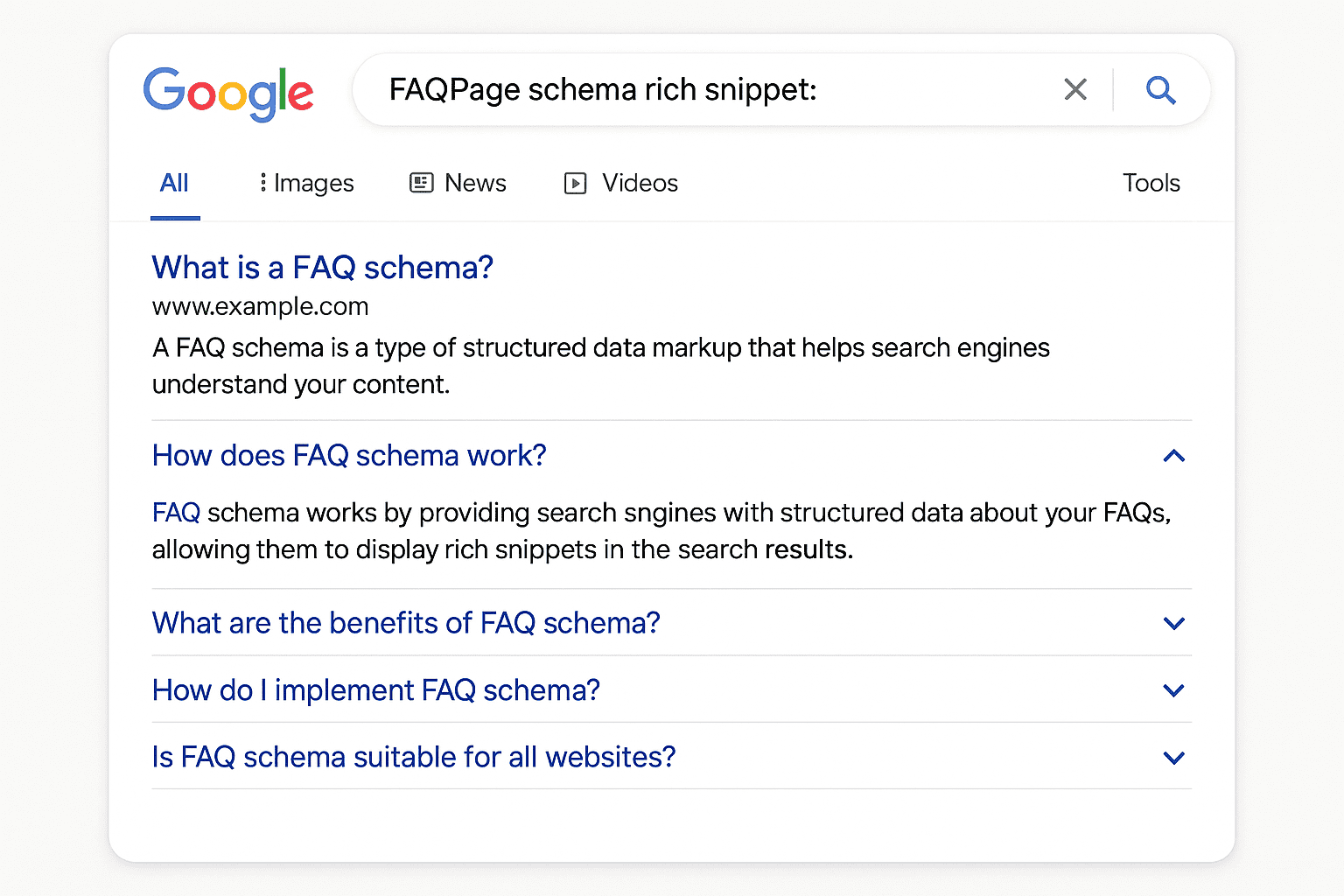
FAQPage schema is one of the most visually impactful and strategically valuable schema types. It enables an accordion-style rich result in Google search, where multiple questions are displayed directly in the SERP with expandable answers. This dramatically increases your SERP real estate, provides immediate value to users, and positions your content as authoritative.
Implementation Guide
The FAQPage schema contains an array of Question entities, each with an accepted Answer. The questions and answers must be visible on the actual page—you cannot markup content that doesn’t exist for users.
<script type="application/ld+json">
{
  "@context": "https://schema.org",
  "@type": "FAQPage",
  "mainEntity": [
    {
      "@type": "Question",
      "name": "What is schema markup?",
      "acceptedAnswer": {
        "@type": "Answer",
        "text": "Schema markup is a standardized vocabulary (Schema.org) that provides explicit information about a page's content in machine-readable format. It enables rich results, AI Overviews, and voice search answers by removing ambiguity about what your content represents."
      }
    },
    {
      "@type": "Question",
      "name": "Why is JSON-LD the preferred schema format?",
      "acceptedAnswer": {
        "@type": "Answer",
        "text": "JSON-LD is Google's preferred format because it separates structured data from HTML content, making it easier to implement, maintain, and scale without risking breaking your markup when updating page content."
      }
    }
  ]
}
</script>
Key Properties: mainEntity (array of Question objects), each Question must have name (the question text) and acceptedAnswer (an Answer object with text property containing the answer).
Validation and Testing
Use Google’s Rich Results Test. It will specifically check for “FAQ” eligibility and flag any missing required fields or policy violations. Common issues include questions that aren’t visible on the page or answers that are too short.
Strategic Benefits: Rich Snippets & AI Readiness
The FAQ rich result is one of the most effective ways to dominate SERP real estate. Your listing can expand to show multiple questions, pushing competitors down the page. For AI systems, FAQ schema provides perfectly structured question-answer pairs that are ideal for AI Overview citations and voice search responses. This schema type is particularly valuable for capturing long-tail, question-based queries.
Article Schema
Article schema helps search engines understand the metadata about your content—who wrote it, when it was published, what organization published it, and what the article is about. While it doesn’t produce a dedicated rich result, it’s essential for establishing content authority, enabling proper attribution in AI Overviews, and potentially qualifying for Top Stories carousels.
Implementation Guide
Add this schema to blog posts, news articles, and long-form content. Use the most specific subtype available: NewsArticle, BlogPosting, or TechArticle instead of the generic Article when applicable.
<script type="application/ld+json">
{
  "@context": "https://schema.org",
  "@type": "Article",
  "headline": "Mastering Website Schema & Structured Data Guide",
  "description": "Complete guide to schema markup and structured data for SEO in 2025",
  "image": "https://example.com/schema-guide-featured-image.jpg",
  "author": {
    "@type": "Organization",
    "name": "Phoenix SEO Geek"
  },
  "publisher": {
    "@type": "Organization",
    "name": "Phoenix SEO Geek",
    "logo": {
      "@type": "ImageObject",
      "url": "https://example.com/logo.png"
    }
  },
  "datePublished": "2025-01-15",
  "dateModified": "2025-01-15"
}
</script>
Key Properties: headline, author, publisher (with logo), datePublished, and dateModified are required. image and description are highly recommended.
Validation and Testing
Use the Schema Markup Validator to check for syntax errors. While Article schema doesn’t have a specific rich result in Google’s Rich Results Test, the validator will confirm all required properties are present.
Strategic Benefits: Rich Snippets & AI Readiness
Article schema establishes content provenance—who created it, when, and under what organization. This is critical for E-E-A-T (Experience, Expertise, Authoritativeness, Trustworthiness) signals. For AI systems, proper Article schema ensures your content is correctly attributed when cited in AI Overviews, increasing brand visibility and authority. It’s also required for Top Stories eligibility on mobile.
Service Schema
While Google doesn’t offer a dedicated rich result for the generic Service type, it’s invaluable for helping search engines understand the services your business offers. It allows you to define what you do, where you do it (areaServed), and who provides it (provider), creating strong semantic connections for your business entity.
Implementation Guide
Add this markup to your service pages. Connect it to your main business entity using the provider property to build a cohesive entity graph.
<script type="application/ld+json">
{
  "@context": "https://schema.org",
  "@type": "Service",
  "name": "Residential Plumbing Services",
  "serviceType": "Plumbing",
  "provider": {
    "@type": "LocalBusiness",
    "name": "City Plumbers Inc."
  },
  "areaServed": {
    "@type": "City",
    "name": "Metropolis"
  },
  "description": "We offer expert residential plumbing services, including leak repair, drain cleaning, and water heater installation."
}
</script>
Key Properties: name, provider (linking to your Organization or LocalBusiness schema), and areaServed are highly recommended to build context. serviceType and description provide additional clarity.
Strategic Benefits: Rich Snippets & AI Readiness
The primary benefit is semantic clarity. Service schema strengthens Google’s understanding of your business offerings, which can improve rankings for service-related queries (“plumbers in Metropolis”). For AI systems, this structured data provides clear, citable information about your services, increasing the likelihood of being mentioned in AI Overviews for relevant user needs.
Review and AggregateRating Schema
Review and AggregateRating schema are used to display star ratings directly in search results. This is one of the most visually impactful rich results, helping your content stand out and build trust with potential customers before they even click. The visual prominence of star ratings can dramatically increase CTR.
Implementation Guide
This schema is typically nested within another type, like Product, LocalBusiness, or Service. The AggregateRating property is used for an average of multiple reviews.
<script type="application/ld+json">
{
  "@context": "https://schema.org/",
  "@type": "Product",
  "name": "The Catcher in the Rye",
  "image": "https://example.com/catcher-in-the-rye.jpg",
  "description": "A classic coming-of-age story.",
  "aggregateRating": {
    "@type": "AggregateRating",
    "ratingValue": "4.8",
    "reviewCount": "13000"
  }
}
</script>
Key Properties: For AggregateRating, ratingValue and reviewCount (or ratingCount) are required. The review content must be visible on the page—you cannot markup ratings that don’t exist for users.
Validation and Testing
Use Google’s Rich Results Test. It will specifically check for “Review snippet” eligibility and flag any missing required fields or policy violations. Google has strict guidelines about self-reviews and review manipulation.
Strategic Benefits: Rich Snippets & AI Readiness
The main benefit is the star rating rich snippet, which is proven to increase CTR significantly. It provides an immediate signal of quality and trust. AI systems can use this data to answer comparative questions (“which product has better reviews?”) and to gauge the authority and trustworthiness of a product, service, or business.
Organization and Person Schema
Organization and Person schema establish entity identity in Google’s Knowledge Graph. They define who you are, what you do, and how you’re connected to other entities. This is foundational for building topical authority and ensuring proper attribution across all your content.
Implementation Guide
Add Organization schema to your homepage or about page. Add Person schema to author bio pages or personal websites.
<script type="application/ld+json">
{
  "@context": "https://schema.org",
  "@type": "Organization",
  "name": "Phoenix SEO Geek",
  "url": "https://phoenixseogeek.com",
  "logo": "https://phoenixseogeek.com/logo.png",
  "contactPoint": {
    "@type": "ContactPoint",
    "telephone": "+1-480-842-5055",
    "contactType": "customer service"
  },
  "sameAs": [
    "https://www.facebook.com/phoenixseogeek",
    "https://twitter.com/phoenixseogeek",
    "https://www.linkedin.com/company/phoenixseogeek"
  ]
}
</script>
Key Properties: name, url, and logo are essential. sameAs (array of social media profiles) helps Google understand your entity across platforms. For Person schema, include jobTitle, worksFor, and knowsAbout to establish expertise.
Strategic Benefits: Rich Snippets & AI Readiness
Organization and Person schema establish your entity in Google’s Knowledge Graph, which is the foundation for all other schema implementations. This enables Knowledge Panels, proper author attribution in search results, and entity-based ranking signals. For AI systems, clear entity definition ensures your brand or personal name is correctly identified and attributed when content is cited.
📌 Which Schema Types Should I Implement First?
Start with Organization/LocalBusiness schema (entity foundation), then add FAQPage schema (immediate rich results), followed by Article schema (content attribution). This sequence establishes your entity identity first, then captures high-visibility SERP features, and finally ensures proper content attribution. For local businesses, LocalBusiness schema is the highest priority. For content publishers, FAQPage and Article schema deliver the fastest ROI. Service schema and Review schema should be added once the foundation is in place.
Chapter 3: Implementation, Validation, and Measurement
Best Practices for Flawless Implementation
Implementing schema markup correctly requires attention to detail and adherence to Google’s guidelines. Follow these best practices to ensure your structured data is error-free, policy-compliant, and maximally effective.
1. Keep Schema and Content in Sync: All information in your schema markup must be visible on the page. You cannot markup content that doesn’t exist for users. If your schema says your business is open until 10 PM, that information must be displayed on the page.
2. Use Specific Types: Always use the most specific schema type available. Instead of generic LocalBusiness, use Restaurant, Attorney, or Dentist. Instead of Article, use NewsArticle or BlogPosting. Specificity improves understanding.
3. Nest Related Schemas: Build entity relationships by nesting schemas. For example, nest AggregateRating inside LocalBusiness, or nest Person (author) inside Article. This creates a rich semantic graph.
4. Implement Site-Wide Entity Schema: Add Organization or Person schema to every page (typically in the header) to establish consistent entity identity across your entire site.
5. Avoid Spammy Practices: Never markup content that isn’t visible to users, don’t inflate ratings or review counts, and don’t markup competitor information. Google actively penalizes schema spam.
6. Use Absolute URLs: All URLs in schema markup (images, logos, page URLs) should be absolute (https://example.com/image.jpg), not relative (/image.jpg).
7. Validate Before Publishing: Always test your schema with Google’s Rich Results Test and Schema Markup Validator before publishing. Fix all errors and warnings.
Validating Your Markup: A Two-Tool Approach
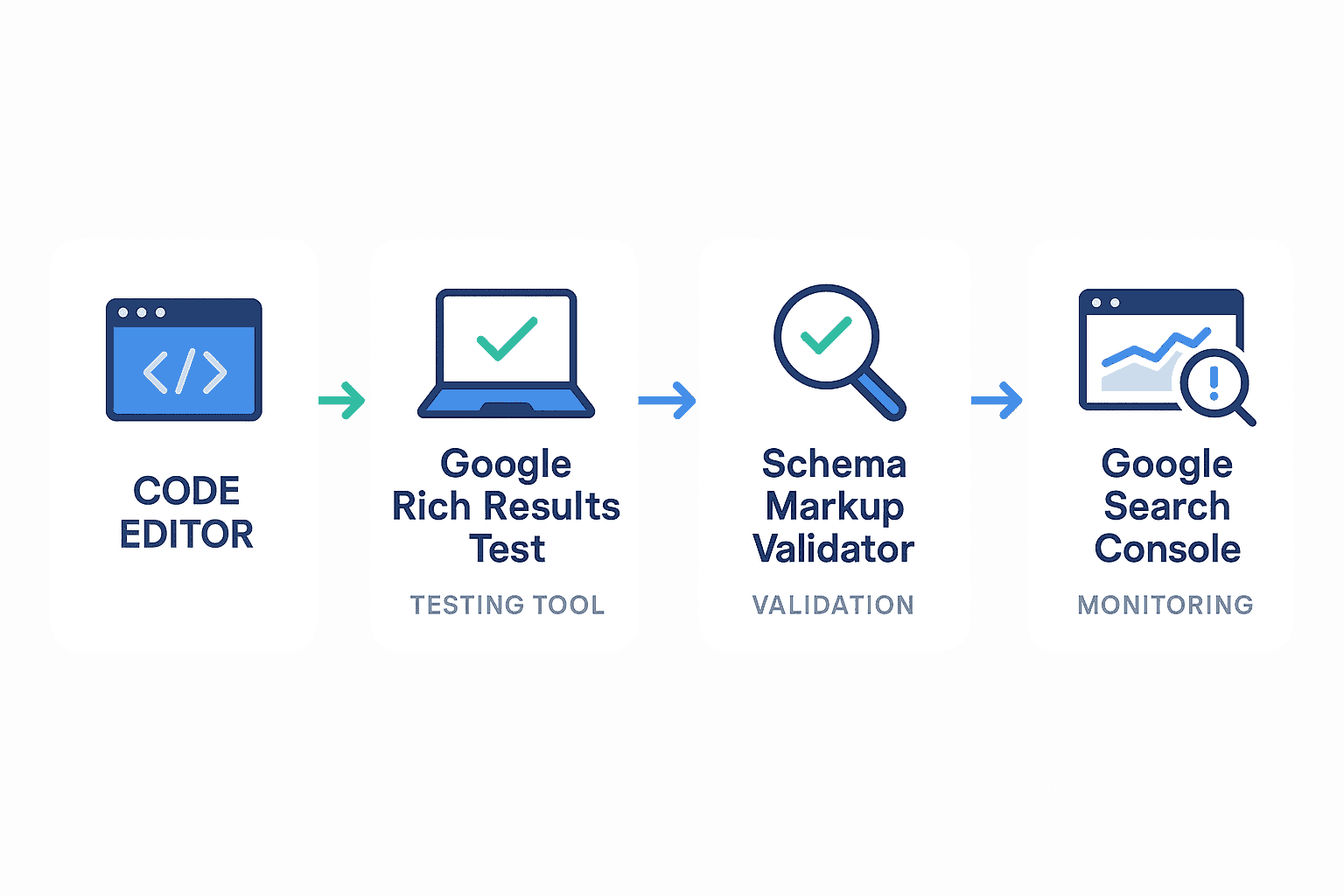
Proper validation is critical to ensure your schema markup is correctly formatted, policy-compliant, and eligible for rich results. Use both of these tools for comprehensive validation.
1. Google Rich Results Test (search.google.com/test/rich-results): This tool specifically checks whether your markup qualifies for rich results in Google Search. It validates FAQPage, LocalBusiness, Product, Recipe, and other rich result types. Use this tool to confirm your markup will actually produce enhanced search listings.
2. Schema Markup Validator (validator.schema.org): This tool validates your schema against the official Schema.org specification. It catches syntax errors, missing required properties, and incorrect data types. Use this tool for general validation, especially for schema types that don’t have dedicated rich results.
Validation Workflow: First, test with Schema Markup Validator to ensure syntactic correctness. Then, test with Google Rich Results Test to confirm rich result eligibility. Fix all errors before publishing. After publishing, monitor Google Search Console’s “Enhancements” section for any issues detected in production.
Measuring the ROI of Your Schema Strategy
Schema markup delivers measurable results. Track these key performance indicators to quantify the impact of your structured data implementation.
1. Rich Result Appearances: Use Google Search Console’s “Search Appearance” report to track how many of your pages are appearing as rich results. Monitor trends over time as you implement more schema types.
2. Click-Through Rate (CTR): Compare CTR before and after schema implementation using Google Search Console’s “Performance” report. Filter by pages with rich results to isolate the impact. Expect 20-80% CTR improvements for pages with rich results.
3. Impressions and Rankings: Track whether schema implementation correlates with improved rankings and increased impressions for target keywords. While schema isn’t a direct ranking factor, the improved CTR and user engagement signals can indirectly boost rankings.
4. AI Overview Citations: Manually track whether your content is being cited in Google AI Overviews for target queries. While there’s no automated tool for this yet, regular monitoring provides valuable insight into AI visibility.
5. Voice Search Traffic: If you have voice search analytics (through tools like Google Analytics with voice search segmentation), track whether structured data implementation correlates with increased voice search traffic.
6. Knowledge Panel Presence: Monitor whether your Organization or Person schema has resulted in a Knowledge Panel. Search for your brand name and track the panel’s completeness and accuracy over time.
Chapter 4: The Future is Structured
Schema’s Role in an AI-First World
As we move deeper into 2025 and beyond, the role of structured data is expanding beyond traditional search engines into the broader AI ecosystem. Understanding this evolution is critical for future-proofing your SEO strategy.
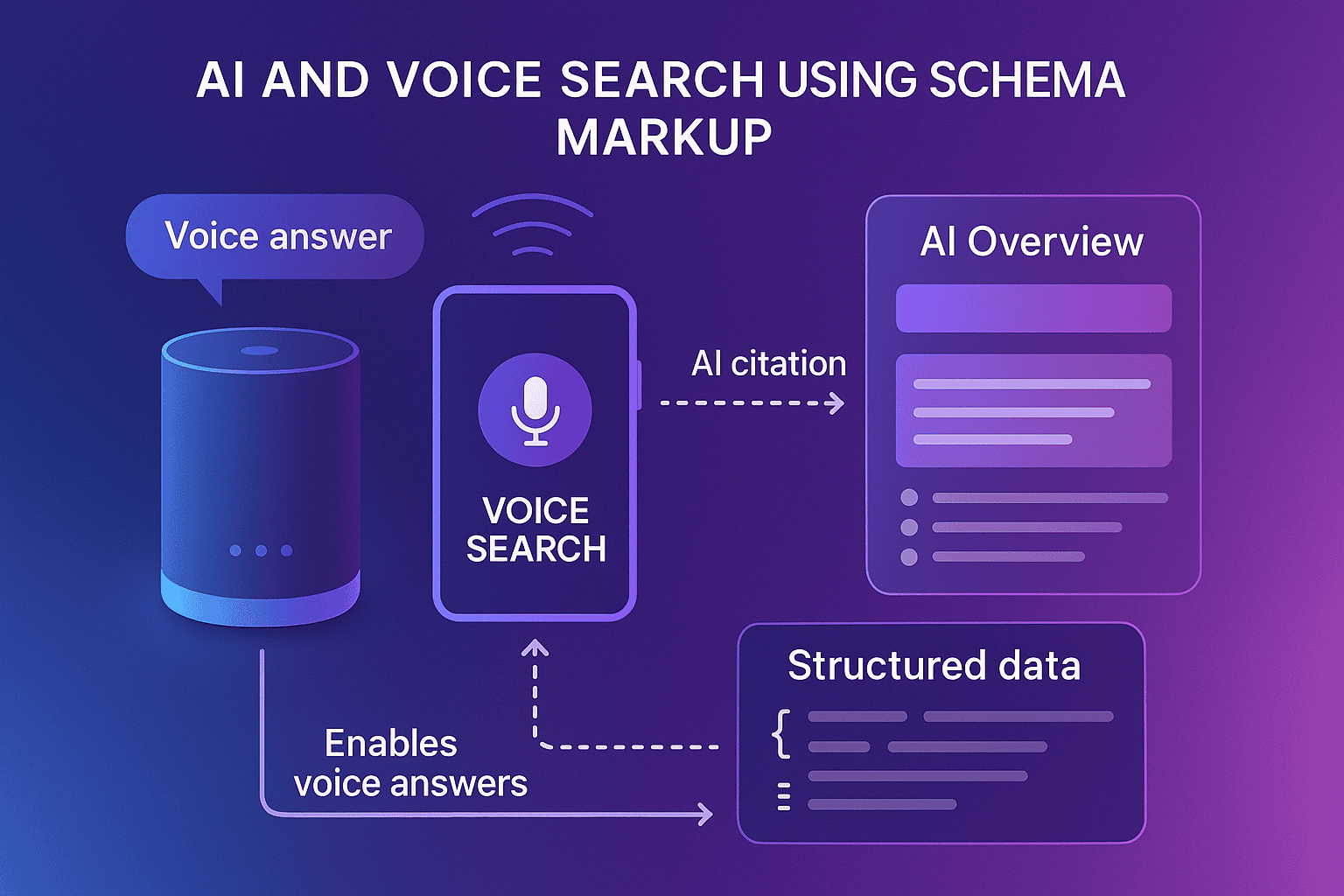
AI Overviews (formerly SGE): Google’s AI-powered search experience relies heavily on structured data to generate accurate, cited answers. When you implement FAQPage, Article, and other schema types, you’re directly feeding the AI systems that power these features. Content with proper schema markup is significantly more likely to be cited in AI Overviews because the structured format makes it easier for AI to extract, understand, and attribute information.
Voice Assistants: Alexa, Siri, Google Assistant, and other voice platforms pull answers almost exclusively from structured data. When someone asks “What time does the restaurant close?”, the answer comes from LocalBusiness schema. When they ask “How do I fix a leaky faucet?”, the answer might come from HowTo schema. Voice search is inherently zero-click—users get answers without visiting websites—making schema markup essential for voice visibility.
Chatbots and AI Agents: As AI chatbots (ChatGPT, Claude, Perplexity) increasingly access real-time web data, structured markup makes your content more discoverable and citable. These systems prioritize well-structured, authoritative information with clear provenance—exactly what schema provides.
Entity-Based Ranking: Google’s algorithms are increasingly entity-centric rather than keyword-centric. Schema markup is the primary mechanism for establishing entity relationships and topical authority. As this trend accelerates, proper schema implementation becomes even more critical for competitive rankings.
Maintaining Your Edge: Auditing and Scaling
Schema markup isn’t a “set it and forget it” tactic. Regular auditing and strategic scaling ensure your structured data remains effective as your site evolves and as Google’s requirements change.
Quarterly Schema Audits: Every three months, conduct a comprehensive audit of your schema implementation. Use Google Search Console’s “Enhancements” report to identify errors, warnings, and coverage issues. Re-validate all critical pages with Rich Results Test and Schema Markup Validator. Fix any issues immediately—broken schema can prevent rich results.
Monitor Google’s Guidelines: Google regularly updates its structured data guidelines and introduces new rich result types. Subscribe to Google Search Central Blog and monitor announcements for changes that might affect your implementation.
Scale Systematically: As you add new content types or expand your site, implement appropriate schema for each new section. Create schema templates for common page types (blog posts, service pages, location pages) to ensure consistent implementation at scale.
Competitive Analysis: Regularly analyze competitor schema implementations using browser extensions (like Schema.org Structured Data Viewer) or by viewing page source. Identify schema types your competitors are using that you haven’t implemented yet.
Test New Schema Types: As Google introduces new schema types or rich result features, test them on a subset of pages to measure impact before rolling out site-wide. This allows you to validate ROI before committing significant resources.
Frequently Asked Questions About Schema Markup
Q: What is the difference between schema markup and structured data?
A: Schema markup and structured data are often used interchangeably, but technically structured data is the broader concept of organizing information in a standardized format, while schema markup specifically refers to the Schema.org vocabulary used to implement structured data. In practice, when SEOs talk about “adding schema” or “implementing structured data,” they’re referring to the same thing: using Schema.org vocabulary (typically in JSON-LD format) to mark up web content.
Q: Is schema markup a direct ranking factor?
A: No, schema markup is not a direct ranking factor—Google has explicitly stated this. However, it has significant indirect ranking benefits: rich results increase CTR, which sends positive user engagement signals; improved visibility leads to more traffic and brand searches; and entity-based schema strengthens topical authority. The net effect is often improved rankings, even though schema itself doesn’t directly boost rankings.
Q: How long does it take for schema markup to show results?
A: Google typically re-crawls and re-indexes pages within 1-4 weeks after schema implementation. Rich results can appear as soon as Google re-processes the page, though it may take several weeks for full visibility. Monitor Google Search Console’s “Enhancements” section to see when Google detects your schema. CTR improvements are usually measurable within 2-4 weeks of rich results appearing. AI Overview citations may take longer to appear as AI systems update their knowledge bases.
Q: Can I use multiple schema types on the same page?
A: Yes, absolutely. In fact, using multiple schema types on the same page is recommended when appropriate. For example, a blog post might include Article schema (for the content), Organization schema (for the publisher), Person schema (for the author), and FAQPage schema (for an FAQ section). A local business page might include LocalBusiness schema, Service schema, and Review schema. Just ensure each schema type accurately represents content that’s actually on the page.
Q: What happens if my schema markup has errors?
A: Minor warnings typically won’t prevent rich results, but errors (missing required fields, incorrect data types, policy violations) will disqualify your page from rich results. Google Search Console’s “Enhancements” report will show specific errors. Fix errors immediately—broken schema provides no benefit and wastes crawl budget. Use Google’s Rich Results Test and Schema Markup Validator to catch errors before publishing.
Q: Do I need schema markup if I’m already ranking well?
A: Yes. Even if you’re ranking #1, schema markup can increase your CTR by 20-80% through rich results, defend your position against competitors who implement schema, and ensure visibility in AI Overviews and voice search. Rankings are never permanent—schema markup helps you maintain and expand your visibility as search evolves. It’s also essential for future-proofing your SEO as AI-powered search becomes more prevalent.
Q: Can schema markup help with local SEO?
A: Absolutely. LocalBusiness schema is one of the most impactful schema types for local SEO. It enables Knowledge Panels, local pack inclusion, and provides definitive business information (hours, address, phone) directly in search results. Combined with Google Business Profile optimization, LocalBusiness schema is essential for local visibility. Add Service schema and Review schema to further strengthen local SEO performance.
Q: Should I hire a developer to implement schema markup?
A: It depends on your technical comfort level and site complexity. For simple implementations (adding a few schema types to a small site), you can likely do it yourself using this guide and Google’s documentation. For complex implementations (e-commerce sites with thousands of products, multi-location businesses, or sites requiring dynamic schema generation), hiring a developer or using a schema plugin is recommended. WordPress users can use plugins like Schema Pro or Rank Math to simplify implementation, though manual JSON-LD often provides more control and flexibility.
Conclusion: Your Blueprint for Semantic Dominance
Schema markup and structured data have evolved from optional enhancements to essential components of modern SEO strategy. In 2025’s AI-first search landscape, the ability to communicate directly with search engines and AI systems in their native language—structured data—is a fundamental competitive advantage.
This guide has provided you with complete implementation blueprints for the most impactful schema types: LocalBusiness for local visibility, FAQPage for rich results and AI citations, Article for content attribution, Service for semantic clarity, Review for trust signals, and Organization/Person for entity establishment. Each schema type serves a specific strategic purpose and delivers measurable ROI through increased CTR, improved rankings, and enhanced AI visibility.
The key to success is systematic implementation, rigorous validation, and continuous monitoring. Start with your highest-priority schema types (typically Organization/LocalBusiness, then FAQPage, then Article), validate thoroughly before publishing, and measure results consistently. As you expand your schema implementation, you’ll build a comprehensive semantic layer that makes your content maximally discoverable, understandable, and citable across all search platforms—traditional, voice, and AI-powered.
The future of search is structured. By mastering schema markup today, you’re not just optimizing for current search engines—you’re future-proofing your visibility for the AI-driven search ecosystem that’s rapidly emerging. Your content will be ready to be discovered, understood, and cited wherever users search, however they search.
Next Steps: Begin your schema implementation with Organization or LocalBusiness schema to establish your entity foundation. Then add FAQPage schema to your most valuable content pages to capture immediate rich result visibility. Validate everything with Google’s Rich Results Test, monitor performance in Google Search Console, and systematically expand your schema coverage across your entire site. The ROI is proven, the tools are free, and the competitive advantage is substantial.

Travis Wilkie is the entrepreneurial force behind one of the most results-driven local search agencies in Arizona. With over a decade of front-line marketing experience and a proven track record of engineering dramatic lead-flow systems for service businesses, his mindset is simple: show up where your prospects are searching, talk to them in real-time, and turn clicks into calls into revenue.
Marketing isn’t about being loud—it’s about being present, persuasive, and persistent. Travis believes that by combining high-touch digital systems (chat, phone, reviews) with laser-focused geo-SEO and AI automation, the difference between “average” and “exceptional” becomes a choice you control.
If you’re a contractor, home-service provider or local business owner in the Phoenix region, partnering with Travis means you’ll:
-
Become highly visible in the coveted Google “3-Pack” map results for entire service territories—so you capture customers who search with intent.
-
Deploy AI chatbots and real-time interaction systems that greet website visitors, book service calls, and nurture leads without you having to chase them.
-
Generate more reviews, build a reputation machine, and turn your online presence into a revenue engine—not just a brochure site.
-
Move past “hopeful marketing” and into “predictable pipeline” mode: you’ll see the metrics that matter, understand the ROI, and scale what works.